
Suga: Ride or Die (2025) Series Review
Blog post description.
THILLER SERIESSERIES REVIEW
Garry Llewellyn
12/7/20256 min read
Streaming On:oOn..

Format: TV Series (8 Episodes)
Network: Sky Atlantic / NOW
Creator: Arne Toonen (Amsterdam Vice)
Starring: Gijs Naber, Elise Schaap, Eva van de Merwe, Robbie Walsh
Genre: Crime Drama / Action Thriller
Late Summer 2025, a cryptic message landed from Hedgehog friend and actor-director Robbie Walsh:
“I’m in a new show.”
Attached was a link to Suga: Ride or Die. Intrigued, we headed over to Prime to take a look.
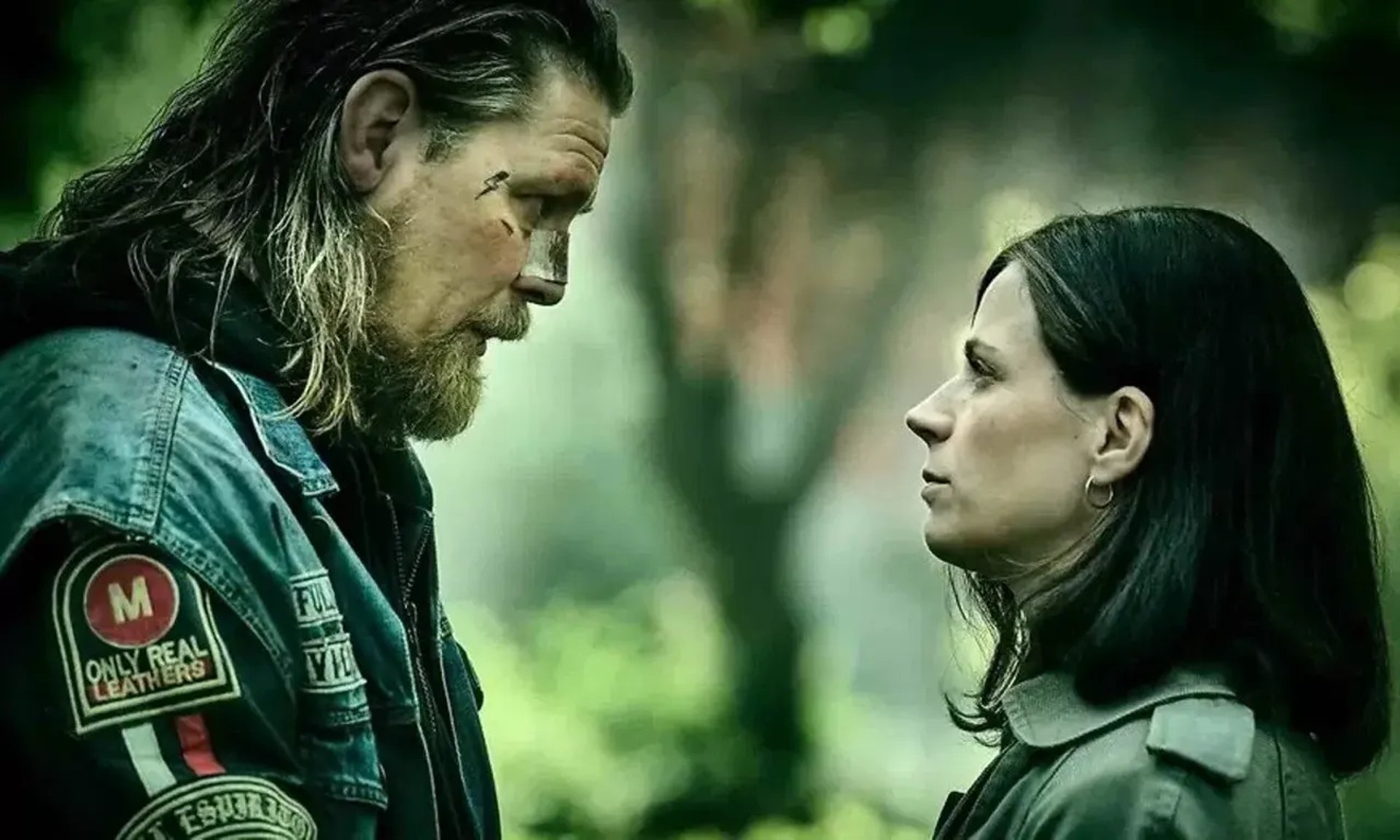
Suga: Ride or Die is a crime drama centred around a motorcycle club ‘The Devil’s Drifters’ and its club president, Suga. This marks a noticeable shift from Walsh’s previous work, it’s genuinely exciting to see him transition from indie productions into something more mainstream with an Amazon Studios logo attached.
Secondly this is not an in English production, it’s a Dutch Show (with English Subtitles) created by Diederik Van Rooijen. That’s intriguing, because a quick search shows that Rooijen has built a reputation for dark, atmospheric storytelling, often focusing on crime, suspense, and psychological tension, exactly the type of shows that we love to watch.
It’s worth noting that we have literally no idea what motorcycle club culture is, as far as Garry knows, Motorcycle culture is a world of leather jackets, bikes and tattoos… which is great, except he doesn’t even know the difference between a between a Harley and a Hedge Trimmer! So with that, onto the review…
Script / Screenplay
The first episode of Suga: Ride or Die wastes no time introducing viewers to the brutal concept of “Bad Standing.” A title card explains that if a motorcycle gang member violates the code of honour, he will be placed in bad standing - extorted, severely beaten, and subjected to the most humiliating punishment a biker can endure.
This message is crucial, as it sets the tone for the entire series: code and honour are the backbone of Suga’s world, underpinning the multiple subplots that drive the drama forward.
The series kicks off with Suga behind bars, where he receives devastating news: his eldest daughter, Daisy, has died. This tragedy shatters the family unit and immediately places Suga on a collision course with rival gangs and internal betrayals. Van Rooijen ensuring that from the outset, grief and loyalty collide, crafting a narrative that is as much about fractured family bonds as it is about biker brotherhood.
You cannot fault the ambition; it’s Gangs of London meets Sons of Anarchy, filtered through a distinctive European lens. After being released from prison, Suga embarks on a relentless hunt for lost drugs. The trouble is, with only five episodes running at a brisk 45 minutes each, Van Rooijen and the writing team have little time to breathe.
As Suga’s quest unfolds, he collides with rival gangs, serial‑killer enforcers, and a certain Irish gangster and drug boss (Walsh), all while being relentlessly pursued by the police. On top of this, Suga faces a desperate family situation that threatens to unravel what little stability he has left. The plot twists and turns like the Mergelland Route in South Limburg, unexpected, and occasionally perilous. It dives into some very dark places, the kind of places where family abuse requires conventional justice to become absent, and a rougher, more brutal form of justice takes its place. The ghost of Daisy driving Suga forward in his quest of revenge.
We, the viewers, have to accept the characters as they are presented. There’s little attempt to provide backstory or depth, and honestly, I am fine with that, the show works because the pace is relentless.
While the pace of Suga: Ride or Die keeps the viewer hooked, the writing isn’t without flaws. The police detective subplot with Prosecutor Lynn van Veen, in particular, has plot holes. Rather than resembling a grounded portrayal of law enforcement, the character feels like a fantasy caricature of how police should act, conveniently appearing when the story demands, bending rules without consequence, taking drugs, and serving more as a narrative shortcut to the shows epic conclusion.
Cast
Gijs Naber as Sander “Suga” Zoeteman
The creative team have found their perfect Devils Drifters front man. Naber’s onscreen presence fits naturally into a character that is both brooding and authoritative. He doesn’t just play Suga, he inhabits him. Every glare, pause, and clenched jaw communicates a man weighed down by grief yet unwilling to show weakness.
Naber’s physical acting is striking, he throws and receives punches with visceral realism, his body language conveying both menace and exhaustion. He moves with the heavy gait of someone carrying years of violence and regret, yet when family loyalty or biker‑club honour is invoked, his delivery sharpens, words spat like bullets, eyes burning with conviction.
What makes his performance compelling is the contrast: moments of quiet vulnerability, where his grief flickers through, are quickly buried under layers of hardened authority. Even when the script races ahead, Naber grounds the chaos with gravitas, so although we don’t get a backstory, Suga feels like a fully lived‑in character rather than just a gang‑land archetype.
Eva van de Merwe as Melissa (Suga’s surviving daughter)
Van de Merwe is handed a difficult job. While Suga dominates the series as kingpin, the script gives her little room to stretch her acting ability. Melissa is written almost exclusively as either an angsty, grief‑ridden teenager or a victim.
Her performance is restricted to extremes, screaming, shouting, or acting vulnerable with few opportunities to explore nuance or growth. That said, Van de Merwe commits fully to the role, ensuring Melissa’s pain feels authentic even when the writing reduces her to a plot device. She brings flashes of raw emotion that hint at what she could do with stronger material, but ultimately Melissa is more pawn than player in the grand biker‑gang chessboard.
Robbie Walsh as Kane (Irish gangster and drug boss)
It’s interesting that while most of the characters around him are larger‑than‑life caricatures, Walsh plays Kane in the opposite register. He opts for a restrained, internalised style that suggests something constantly ticking away in his mind. Rather than shouting or swaggering, Walsh leans into silence, menace, and focus a man whose power comes from what he doesn’t say as much as what he does.
Walsh seems to be building on the gangster vibes he explored in his indie film Split, but here he sharpens them into something moodier and more deliberate. His Kane is serious, singularly focused on his drug empire, and radiates a kind of quiet chaos. The performance is moody, focused, and unsettling Kane feels like a predator circling the edges of Suga’s world, waiting for the right moment to strike.
Walsh grounds his character in stillness and intensity, giving Kane a dangerous credibility.
Production
This is no John Wick, Suga: Ride or Die trades balletic gun‑fu for raw, bruising chaos. As one would expect in a biker bar, the fights are scrappy, the blood is thick, and the violence feels blunt and unplanned rather than choreographed to an inch of perfection. Every punch lands heavy, every knife slash is messy, and every gunshot reverberates with grim realism.
The effects team keep things grounded: blood packs, bruises, and broken bones are delivered with unflinching impact. It’s a graphic show, justice here is paid in fists, blades, and bullets.
That said, the show still requires the viewer to suspend disbelief. A scene where a motorbike is launched into a van is a pure “as if” moment the kind of stunt that jolts you out of the gritty realism, and reminds you this is pulp entertainment at heart.
The sound design matches the show’s gritty tone. Fights are accompanied by heavy thuds, bone‑crunching impacts, and the metallic scrape of knives. Gunshots reverberate with a grim realism. Motorcycles are given their own sonic personality: engines roar and snarl, underscoring the gang’s dominance and adding texture to chase sequences.
Overall Thoughts.
Watching Suga: Ride or Die transported us into a world we became in awe of. We have no idea if this biker underworld is realistic, and I suspect those who live closer to it would dismiss the show as fiction nonsense. But for those of us without a clue, it’s astonishing to imagine such a world could exist.
If you don’t dive too deeply, what you get is a thoroughly entertaining and somewhat under‑appreciated show. Given more episodes, there are clearly deeper stories waiting to be told. Those subplots from Melissa’s grief‑ridden rebellion to Lynn’s questionable law‑enforcement manoeuvres add texture, even if they sometimes feel undercooked. They hint at richer storylines that could be told, if given more time.
Another unexpected bonus: because it’s English‑subtitled, we picked up a little Dutch along the way. It was fun comparing the Dutch words to their English equivalents.
It’s bloody, chaotic, and far from slick but by the end you might still mutter ‘Bedankt voor de leuke tijd’ as the credits roll.
🦔 Overall Silver Hedgehog Rating: 4 / 5
A gritty, chaotic ride that entertains despite its flaws. Not perfect, but undeniably memorable.
About The Silver Hedgehog
The Silver Hedgehog is a review website dedicated to providing in-depth reviews. We aim to review a wide variety of Films, Entertainment, Family Days Out and Special Features.
As an Amazon Associate I earn from qualifying purchases.
Indie Filmmakers, Publicists and Small Business Owners
Indie filmmakers, publicists, creatives, and Small Business owners interested in coverage
please email screeners or inquiries to submissions@thesilverhedgehog.com
©️Garry Llewellyn 2020-2026 All text is the property of Garry Llewellyn and TheSilverHedgehog.com.
Text should not be reproduced in whole, or in part, without permission from the author.
All images, unless otherwise noted, are the property of their respective copyright owners.