

Supergirl (2026) Film Review: Woman of Tomorrow, or Maybe the Day After
Is the new Supergirl movie a faithful adaptation or a recycled trope? In this review, we dive into Supergirl (2026), exploring how it strays from its "True Grit" comic roots to deliver a muddled, self-destructive take on Kara Zor-El.
NEW12A/12SCI-FI
Garry Llewellyn
11/1/202611 min read

Supergirl 2026
Rating: 12
Director: Craig Gillespie
Starring: Milly Alcock, Matthias Schoenaerts, Eve Ridley, David Krumholtz, Emily Beecham, David Corenswet, Jason Momoa
Runtime: 108 minutes
👎 What doesn’t
Muddled Narrative
Supergirl is Undermined
Inconsistent Logic
👍 What works
Strong Casting
Compelling Flashbacks
High-Quality Visual Effects
''The film delivers style over substance''
Rating: 3/5
★★★
"There is no such thing as an original idea. It is impossible. We simply take a lot of old ideas and put them into a sort of mental kaleidoscope."
- Mark Twain
Watching Supergirl (2026) makes me think about that old saying that Hollywood is full of recycled ideas. When will filmmakers understand that a story doesn’t have to be revolutionary to be amazing, but it just needs to honour its characters? It seems that execution, consistency, and honouring narrative frameworks are concepts that have eluded the writers of Supergirl.
Supergirl: Woman of Tomorrow is based on an 8-issue comic miniseries of the same name.
The comic is framed explicitly as a space-western (heavily inspired by True Grit). Kara Zor-El is celebrating her 21st birthday under a red sun, drowning her grief, when 13-year-old Ruthye Marye Knoll hires her to hunt down Krem of the Yellow Hills, the mercenary who murdered Ruthye's father and poisoned Krypto the Superdog.
The Script / Screenplay
Screenwriter Ana Nogueira (The Vampire Diaries) adapted Tom King's 8-issue miniseries into the film we see today, but that strong True Grit comic inspiration quickly makes way for a far more muddled and diluted narrative.
Like many people watching Supergirl, I walked in without a PhD in DC lore. I know Batman, have a vague recollection of a few other DC characters, and know Supergirl primarily from old films and TV shows. Historically, where Clark Kent goes, Kara shortly follows. Going into a story I knew little about, I expected a strong female lead with powers, conviction, and a heart that matched Superman. Instead, what we get on screen is a stoned, drunk twenty-something who feels completely lost in the universe and locked on a self-destructive path whilst living alone in a trailer. This is an archetype we have seen a hundred times before, most famously with Martin Riggs living alone in his caravan at the start of Lethal Weapon (1987).
For Kara, though, it gets worse...
Rather than letting Supergirl drive her own narrative, the film demotes its title hero to a bodyguard. The narrative belongs almost entirely to Ruthye Marye Knoll, a character who feels like a wholesale copy of Game of Thrones’ Arya Stark. From her archaic, almost medieval speech cadence to her father’s heirloom sword (a direct stand-in for Arya's "Needle") and the feather emblem of her fallen house. Ruthye’s quest for revenge drives every single beat. Where Arya Stark had eight seasons to explore how trauma corrupts a child’s soul, Ruthye’s arc is compressed into two hours, flattening a complex archetype into a shallow plot device.
The sword itself creates one of the script's biggest plot-hole headaches. We are told it is supposedly the single greatest blade in the entire universe, crafted with mythical significance, yet the movie never bothers to explain how it is made, or quite why it is so significant. At one point, a supporting character clearly knows about the blade's maker and tries to steal it, only for the whole conflict to be used merely to show the audience that Supergirl has no powers... Why? We come to find out she is under a red sun…more on that later. This supposedly amazing sword is only referenced again at the end of the film once the writer remembers whether it is, or isn’t important.
Kara, for the most part, wants to stay out of Ruthye’s way—that is, until Krypto the Superdog is shot with a poisoned arrow, and left at death's door. It is at this point that Supergirl decides to get involved and obtain the antidote at any cost. A pet-revenge plot akin to John Wick (the lesson here: don’t mess with a Hollywood dog!) Along the way, Kara uncovers a massive female-trafficking ring, meaning we now have a pet-revenge plot, a parent-revenge quest, and galactic female trafficking, all happening in the same movie!
There is an unavoidable parallel that needs to be drawn here to producer James Gunn’s previous films. In Guardians of the Galaxy Vol. 3, Gunn introduced animal genetic testing, building the entire emotional arc of the film around Rocket's trauma to deliver a powerful, heartfelt condemnation of cruelty. Here, under his producing banner, the 'shock' the film introduces is female trafficking. Yet it lacks any of the emotional impact of his previous work. Dropping such a real-world horror into a family cosmic blockbuster without giving it genuine moral weight or narrative respect feels deeply disjointed and, dare I say it, disrespectful.
Adding to the fact that Kara is now a de-facto bodyguard, Supergirl doesn’t get to handle the villains herself, except for a space battle, set on a space taxi, that looks lifted straight out of an episode of Doctor Who, complete with BBC budget alien beings. This begs the question: why is it that male heroes like Superman get to display moral leadership and conviction, typically working solo and owning their films? Supergirl, by contrast, doesn’t get that luxury. Why? Because the protagonist is a woman? Sure, she has fight scenes, but the moment the fight gets a bit too much, in comes a male immortal to do the heavy lifting. Do the writers and producers have no faith in how strong their heroine is?
Now let's talk about the suns. Something that is new to me is how the light of different suns dictates Kryptonian biology. Yellow sun = Good, Red sun = Meh, Green sun = Baaaad. How does the mechanics of Kryptonite crystal become the same green radiation eminated by a sun? Kara must get so confused when she encounters a traffic light on Earth!
Anyway, that slight mind-wander aside, the movie treats solar physics like an arbitrary plot switch. Characters bounce between Red, Green, and Orange suns, with Supergirl’s powers vanishing, returning, or fluctuating, purely whenever the script needs an action beat.
At one point they throw Supergirl onto a planet that has a green sun by day and a yellow sun by night. That way, she can almost be killed and the villains will happily discuss how she is no longer a problem, and how a Kryptonian will fetch a high price, while completely forgetting that the yellow sun will rise and power her back up! The villains of the story, so technologically advanced that they can capture and enslave, simply did not account for a sun rising and setting... oh, come on!
In Christopher Reeve's original Superman films, Superman reaching toward the sun to recharge felt like an earned, heroic milestone. A fist-pump moment. Yet Supergirl does this three or four times, like it’s a normal day at the office.
I get it: Superman, raised on Earth with access to a personal data centre in the Arctic that would make Jeff Bezos giddy, has the luxury of a largely peaceful existence. Kara, by contrast, is alone in the galaxy and has had to learn street smarts, so she knows how to repair herself, and uses the sun like an F1 team uses a pit stop. This casual use of a major character trait erodes the audience experience of the power-up moment.
Then there is the question of Supergirl’s moral logic. Does she have morals? Probably not. Throughout Ruthye’s quest for revenge, Supergirl lectures her on the corrupting nature of hatred, warning her that using a sword for revenge will permanently stain her soul (how very Kryptonian of her). Yet when the moment comes, Kara takes that exact sword and executes the villain herself. The film abandons its own lesson, offering a cheap, hypocritical ending.
The script is not all poor choices, though. There are moments of genius, especially with flashbacks to Kara's childhood. Generally I don’t like flashbacks; they are often a lazy substitute for good writing. That said, the Kryptonian disaster and the remaining floating city are genuinely interesting and well-written. They weave in the origin story of Kara and help the viewer, understand the different paths the cousins took, and why she is so self-destructive. This also leads into the scenes with Clark. Whether on a video call or face-to-face, their interactions reflect a familial relationship, almost brother and sister, which is exactly what you would expect from two remaining members of the same species, with a family link.
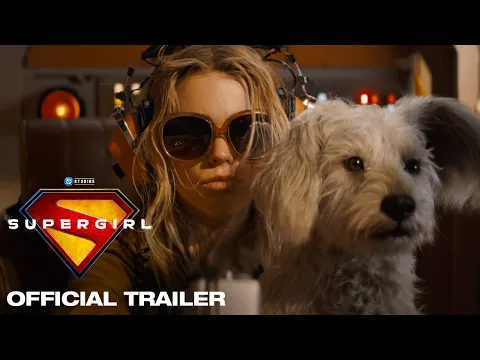
''Back in the late 1970s, Christopher Reeve convinced the world that a man could fly. Fast forward to today, and Milly Alcock’s performance in Supergirl brings a refreshing continuity to the character.''
- Garry The Silver Hedgehog
Casting
Casting directors Lucy Bevan and Olivia Grant (with proven records having previously assembled near-flawless casting for Barbie and The Batman) have given their services to Supergirl. They almost reach those same heights of perfect casting, apart from one obvious addition: Jason Momoa. That said, even a brilliant cast cannot overcome characters that are fundamentally ill-written.
Milly Alcock as Supergirl
I first saw Milly Alcock in the Australian drama Upright, where she played Meg, a runaway, foul-mouthed teenager harbouring deep trauma (sound familiar?) while hauling a piano across the Outback alongside Tim Minchin. Seriously, check it out; it’s great.
She was brilliant in that role, effortlessly balancing raw teenage angst with genuine vulnerability. She later brought that same fiery edge to young Rhaenyra Targaryen in House of the Dragon (another Thrones link)
Given her display of talent and a niche for young woman rage, casting her as Kara Zor-El makes complete sense. Alcock clearly has the emotional range to play a battle-worn, grieving Kryptonian. Unfortunately, the script gives her almost nothing heroic to work with. Instead of letting her display quiet strength or leadership, the directing leans far too heavily into her Upright persona, reducing her to a moody, drunk adolescent in space who spends most of the movie reacting to the plot rather than commanding it. One glimmer of hope is that if DC follow the Marvel playbook, we might get to see Alcock in sequels, cameos and spinoffs for years to come, and that can only be a good thing.
Jason Momoa as Lobo
While the primary cast tries their best with a fractured script, the introduction of Lobo, played by Jason Momoa, breaks the film's tone entirely. To anyone like me without a deep background in DC Comics lore, his presence is utterly baffling.
Speaking like an unhinged Beetlejuice and taking out bad guys on a space motorcycle like Ghost Rider, he is vaguely introduced as an immortal powerhouse with a God complex. Every time he appears on screen, Kara squirms like it is the worst news imaginable. Yet, despite all the buildup, nothing actually happens. Sure, a few henchmen get flung around, but it hardly feels like the world-ending chaos the script promised just scenes before.
Momoa functions as nothing more than a trash-talking, low-rent bounty hunter. Star Wars and The Mandalorian have executed the "cynical space mercenary" trope with far more skill. Dropping an unexplainable caricature into an already crowded plot without establishing his power or origins trades genuine storytelling for empty posturing, which is especially frustrating given that Momoa has repeatedly said in interviews that he waited his whole life to play this role.
To the vast majority of moviegoers, Jason Momoa is still Aquaman. The hard reboot between the previous DCEU and this new iteration has not been made clear to casual audiences, making his sudden appearance as an entirely different cosmic antihero deeply confusing.
Eve Ridley as Ruthye
We first meet Ruthye standing frozen in sight as Krem of the Yellow Hills,invades her house and kills her family. These events trigger a revenge arc that is so prominent it should be the Ruthye movie.
Eve Ridley's acting isn't the problem here; she gives a completely committed performance for a child actor (think 12 at the time of filming). The problem is that Ruthye as a character is thoroughly annoying, stupidly written, and frustrating to watch. How many times do we have to hear her repeat the exact same formal stance about her dead parents? Repeating her tragic backstory over and over doesn't make it any more impactful; it just makes her exhausting.
Worse still, her presence completely steals the spotlight, leaving Supergirl standing in the background of her own film as an overqualified bodyguard. Let’s hope Eve Ridley's career goes from strength to strength; she needs a better film here...
Sound
Watch out, James Gunn is about…
At this point, virtually all modern comic book movies (with the rare exception of anything Batman) are falling into the exact same formula: throw in identifiable tracks designed to evoke an instant hit of pop-culture nostalgia. Anything recognisable to the under-50 crowd is fair game. Who is the undisputed master of this technique? Yep, James Gunn.
So it comes as no surprise that director Craig Gillespie and composer Benjamin Wallfisch try to mimic Gunn's signature style. Supergirl has pop and rock tracks scattered throughout, and it all feels aggressively familiar. But where Gunn uses music to build character, here it all feels a bit desperate.
Noticeably, almost all of these needle drops share the same trait, male-fronted anthems have been rerecorded as soft, acoustic or downtempo covers sung exclusively by female artists. A female led soundscape for a female led film. The Spice Girls must be happy with the amount of Girl Power on display. A quick look at the soundtrack lineup proves my point:
"The Middle" (Jimmy Eat World) Covered by Kelty Greye & KidMotel
"Everlong" (Foo Fighters)
Covered by Hannah Grace
"Sweet Child O' Mine" (Guns N' Roses)
Covered by Jasmine Thompson
"Mr. Brightside" (The Killers)
Covered in a slowed acoustic folk arrangement
The most jarring offender comes in a major fight scene, where that slowed-down, acoustic cover of Jimmy Eat World’s "The Middle" gets played over a scene that has a sniff of Mad Max about it.
Hearing the track made me smile as I remembered the original, then made me wonder why they took an upbeat, high-octane pop-punk classic and flattened it into a moody acoustic cover. It just feels a little cliché, like something pulled straight off a John Lewis Christmas advert. Is this the empowerment the producers hoped for?
The Supergirl score doesn’t get much better either.
Someone gave Benjamin Wallfisch the brief: Superhero Cowgirl in space with trauma. Wallfisch scored Blade Runner 2049, IT, and … The Flash.
A Blade Runner style score would have been the perfect style for this film. What Wallfisch has created though, is sadly a very generic score, Supergirl has no iconic identifiable theme. No one is going to be humming the theme in a school playground, another missed DC opportunity. The rest of the score sounds like a temp track influenced by James Horner’s Braveheart.
Visual Effects and Costumes
Back in the late 1970s, Christopher Reeve convinced the world that a man could fly. Fast forward to today, and flying people are all over the place, yet Milly Alcock’s performance in Supergirl brings a refreshing continuity to the character. The specific movement of her arms when flying, and the way she pulls both arms forward when power flight is needed is an Easter egg connecting her to the classic films.
The connection to the original Superman continues: Anna B. Sheppard (lead costume designer) and Michael Mooney (contributing designer) updated the Supergirl suit; not only did they keep the character's classic skirt, they located leftover material from the 1978 Superman costume and weaved it into the new suit design.
Video Quality
The cinematography and framing by Rob Hardy are competent, but lack a distinct visual identity. As director of photography, Hardy relies extensively on a grey, post-apocalyptic palette typical of any Space movie, and hyper-stylised action sequences that appear derivative of superior science-fiction films, ‘borrowing’ a desert aesthetic eerily reminiscent of the Mad Max franchise. Inconsistent lighting during darker scenes frequently obscures the action. Although individual visual effects are polished, the world-building raises numerous unresolved questions, most strikingly, why would space-faring civilisations equipped with starships and advanced technology combat with medieval broadswords?
The Silver Hedgehog Overall Rating : Average
In the end, Supergirl (2026) serves as a frustrating reminder of Mark Twain’s quote at the top of this review. The filmmakers certainly had all the right pieces a great character, a rich comic book foundation, and a talented cast. Supergirl isn't a total disaster, but it is deeply memorable for all the wrong reasons. By forcing Kara Zor-El into a tired, self-destructive archetype, drowning the plot in unexplained lore, and abandoning its own moral message, the film delivers style over substance leaving its title hero stranded in someone else's story.
The Silver Hedgehog Rating:
5 'Must Watch'
The Script / Screenplay
🦔🦔🦔 2
Casting
🦔🦔🦔 3
Music / Score
🦔🦔 2
Visual Effects and Costumes
🦔🦔🦔🦔🦔 5
Video Quality
🦔🦔🦔 3
Words: Garry
Editor: JJ
Images:TMDB
If you enjoy Sci-Fi films that you may also want to check out these other reviews here on The Silver Hedgehog.


2


1
3


About Garry
I’ve been writing in‑depth reviews since 2020 and I’m a proud supporter of independent cinema. I’m a lifelong Sci‑Fi fan, and I probably spend far too much time photographing anything that catches my eye.





Support us please
If you like what we write, please show your appreciation buy buying us a coffee, it helps keep the site running.


Get in touch
Reach out to us for reviews, features, or collaborations today.
About The Silver Hedgehog
The Silver Hedgehog is a review website dedicated to providing in-depth reviews. We aim to review a wide variety of Films, Entertainment, Family Days Out and Special Features.
As an Amazon Associate I earn from qualifying purchases.
Indie Filmmakers, Publicists and Small Business Owners
Indie filmmakers, publicists, creatives, and Small Business owners interested in coverage
please email screeners or inquiries to submissions@thesilverhedgehog.com
©️Garry Llewellyn 2020-2026 All text is the property of Garry Llewellyn and TheSilverHedgehog.com.
Text should not be reproduced in whole, or in part, without permission from the author.
All images, unless otherwise noted, are the property of their respective copyright owners.