
The Sweetest Kill (2026) | Film Review
The Silver Hedgehog review of The Sweetest Kill. A traumatized vet turned money launderer steals from her drug-dealer boss to pay off debts owed by the beautiful but equally troubled woman with whom she is having an obsessive affair.
FILM REVIEWTHRILLERINDIE15
Garry Llewellyn
6 min read



Jane PR contacted us and asked if we’d like to review indie film The Sweetest Kill. It’s a noir thriller set in LA with an LGBTQ+ storyline. That’s a lot of firsts for us, so naturally we said yes.
Initially titled ‘The Low End Theory’, the film has changed its name for the international streaming release to - The Sweetest Kill. Co-written and produced by Sofia Yepes and director Francisco Ordoñez.
The film has been described as a Neo Noir. For those unfamiliar, a typical noir thriller centres on a flawed and morally ambiguous protagonist. This often includes a femme fatale and explores themes of greed, jealousy, and lust. The protagonist is usually drawn into a downward spiral, from which escape seems impossible, blurring the lines between right and wrong as they spiral deeper into a no-win situation. Stylistically, noir films are characterised by a bleak and nihilistic tone, often presented in a monotone colour palette.
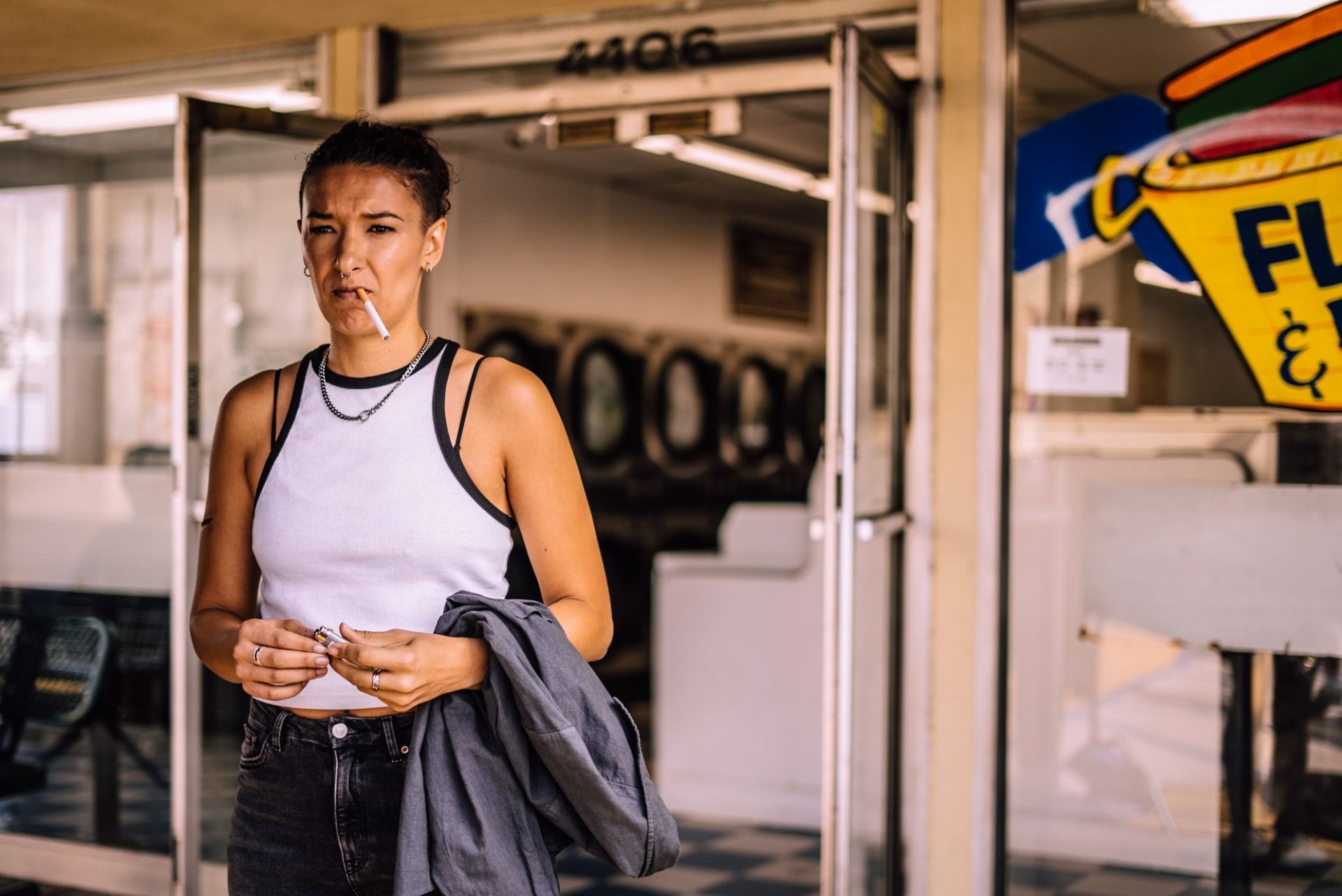
The Sweetest Kill shows us the story of Raquel Pacheco a vet (no, not the animal kind, no doggies here) who dreams of becoming a breakthrough Hip-Hop artist in LA.
The story plunges us straight into urban LA, complete with graffiti tags sprayed over garage doors, and a view of uptown LA stretching into the distance. We witness Raquel attempting to make it in the music industry.
One day, Raquel literally bumps into Veronica (Sidney Flanigan), who is in a mild panic from an attempted mugging. Whilst offering support to the stranger Raquel gets drawn into an illicit romance, despite being engaged to her drug dealer boss’s sister.
The ensuing affair leads down a disruptive path, as Veronica has a nasty habit of being beaten up and abused by persons unseen, all over that age-old trope of unpaid ‘debts’. Raquel is so taken in with her new lover she comes up with a plan to get her the money she needs. Only, that’s not enough, and more money is required, driving Raquel to work out a way to get it, escape her money laundering life and start a new with her lover and become the Hip-Hop diva she dreams of being.
Crafting a gripping indie film full of twists turns must be challenging, and then setting it in the underutilised Latino underworld and adding a LGBTQ+ voice, even more so. But as Yepes weaves a tale of duplicity that asks questions on how much loyalty one person can give. We encounter a host of characters and subplots, which serve as powerful catalysts propelling the film towards its dramatic conclusion.
The narrative spans various settings from strip clubs to warehouses, weaving a subplot involving a sister, and an unusual use for a fridge. Intimate scenes unfold between Raquel and her fiancée Giselle, or her new lover. The writers explore diverse themes, not shying away from immersing the audience in the LGBTQ+ and Latino worlds. Through Raquel’s perspective, we see her surrounded by supportive friends and acquaintances.
Critically speaking, it feels like the pace at times is a little too sedate. At the start of the film, we spend a lot of time watching Raquel go about her money laundering activity. Do we really need the bank and money montages? As we become more drawn into Raquel’s downward spiral, the good thing is the world building feels authentic. I know nothing about suburban LA, but feel transported into this world of crime and aspiration. There are characteristics that simply get forgotten for large parts of the film, such as Raquel’s reliance on taking signals from the universe. Frustratingly, a major twist in the story is signposted early on, during the ‘chance’ encounter with Veronica, making things to come a little too obvious. I think there is a much tighter film lurking within the screenplay.
The Sweetest Kill Casting
Here is my pick of 3 cast Members
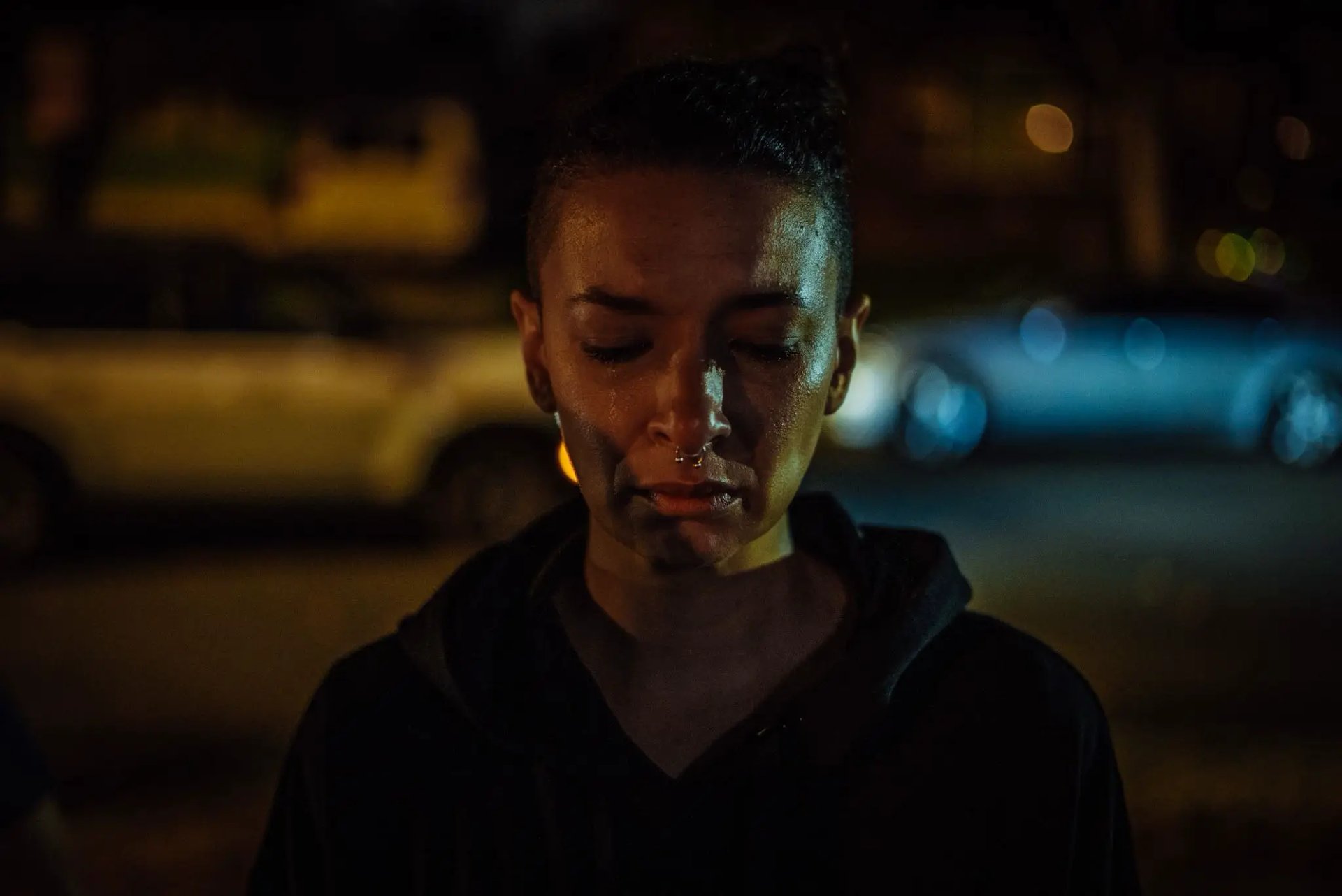
Sofia Yepes as Raquel
Throughout the film, I questioned whether Sofia is a military veteran. Despite the numerous flashbacks and military tattoo, Yepes’ performance did not resonate with me as being ex-armed forces. I did, however, believe that Raquel had aspirations of becoming a hip-hop producer, who had accumulated debts with a drug dealer financier. Yepes’ characterisation of Raquel’s relationships is authentic and visceral. She demonstrates a talent for aligning her character’s emotional state with her pitch and body language. This is particularly evident in the contrast between her performance with Ser Anzoategui who plays Giselle, whose gentle and loving nature requires sensitivity, and with Sidney Flanigan whose character feeds off Yepes portraying deepening levels of obsessive mania. Yepes maintains a consistent level of believability within scenes.
Sidney Flanigan as Veronica
Sidney fully immerses herself in the victim persona of Veronica. Flanigan demonstrates a wide range of acting skills, portraying seduction in one scene and destructive rage in another. Flanigan is also able to bring a sense of vulnerability that makes Veronica’s plight and scheming believable. Sidney’s performance is consistently strong.
Rene Rosado as Efraim
In his portrayal of Efraim, Rene Rosado demonstrates that he can balance the characterisation of a drug henchman with his day to day life supporting his friend (Raquel) with her musical ambitions. His performance captures Efraim’s emotional layers and complexities, showing moments of vulnerability, alongside a strong exterior. Rosado’s presence on screen ensures that Efraim remains memorable and impactful throughout the story.
The Sweetest Kill, Sound
While I am often critical of indie productions for overlaying stock music, which detracts from the scene, and using substandard microphones that make dialogue difficult to hear, The Sweetest Kill suffers from a new problem: artistic choice.
This is the term I have chosen to describe the film’s numerous sound issues. For example, in the bus scene where Raquel gazes out of the vehicle, a solo beat of background music is heard. A short while later the same beat is heard as if the track is restarting and then a clip of music is played. This is very jarring. Later in the film Raquel’s aspirations to be a hip-hop artist are made clear and it is possible this was an artistic choice to convey daydreaming. However, this is not entirely clear.
Several other times in the film, the speech audio is abruptly removed leaving only the background music and forcing the viewer to lip-read. It is unclear whether this is an issue with the screener, or an inherent problem with the release. Initially, I thought it was a clever artistic choice, the director experimenting with sound. However, it happened too frequently, making me question if it was an attempt at censorship?
In any case, it is an unusual sound choice.
The good news is that Will Bates, Berner and Erik Lutz provide an original score and soundtrack, that is simple yet effective, and the Hip Hop tracks in development, sounded authentic to my ears (I know nothing about Hip-Hop!)
Visual Effects and Costumes
A huge shoutout to the work of the Art and makeup crew. They transformed the clean-cut actors, giving them an aesthetic befitting each character’s personality. They use muted palettes for styling, that align with the noir style.
Just look at Rene Rosado’s IMDb profile. His headshot shows a dark-haired handsome man, but in the film he’s unrecognisable, with his bleached blonde hair, tanned look and tattoo covered body. Great to see such attention to detail within the confines of an Indie production.
Video Quality
Gemma Doll-Grossman is on Cinematographer duties for The Sweetest Kill. Reinforcing the neon noir style, Gemma has opted for a yellow colour palette, which evokes a noir-inspired atmosphere, while still feeling contemporary.
The muted warmth reinforces the mood of melancholy and tension, giving each frame a subtle, cinematic weight. I also liked the careful integration of stock footage. The grading is so meticulously handled, that the borrowed clips blend seamlessly with the original material, making their presence virtually imperceptible. This level of finesse adds a polished, cohesive quality that draws us, into the story without distraction.
Overall thoughts
The Sweetest Kill is a carefully crafted thriller that goes for a noir aesthetic, and largely succeeds.
The deliberate pacing gives the story time to unfurl, whilst building towards narrative twists. This keeps audiences guessing to a point. The combination of visual style, character depth, and psychological complexity, ensures that The Sweetest Kill not only pays homage to the tradition of film noir but also delivers a modern thriller. The inclusion of under represented groups add another level to the narrative. Despite my niggles with the sound, overall this is a solid indie film that should satisfy fans of the genre.
The Silver Hedgehog Rating: 4.2 'Recommended'
The Script / Screenplay 4
🦔🦔🦔🦔
Casting 4
🦔🦔🦔
Visual Effects and Costumes 5
🦔🦔🦔🦔🦔
Sound 3
🦔🦔🦔
Video 5
🦔🦔🦔🦔🦔
A solid indie film that should satisfy fans of the genre.
Words Garry
Editor JJ
Images The Movie Database
About Garry
I’ve been writing in‑depth reviews since 2020 and I’m a proud supporter of independent cinema. I’m a lifelong Sci‑Fi fan, and I probably spend far too much time photographing anything that catches my eye.

You might like our other Indie Film Reviews.


Support our website with a coffee.


About The Silver Hedgehog
The Silver Hedgehog is a review website dedicated to providing in-depth reviews. We aim to review a wide variety of Films, Entertainment, Family Days Out and Special Features.
As an Amazon Associate I earn from qualifying purchases.
Indie Filmmakers, Publicists and Small Business Owners
Indie filmmakers, publicists, creatives, and Small Business owners interested in coverage
please email screeners or inquiries to submissions@thesilverhedgehog.com
©️Garry Llewellyn 2020-2026 All text is the property of Garry Llewellyn and TheSilverHedgehog.com.
Text should not be reproduced in whole, or in part, without permission from the author.
All images, unless otherwise noted, are the property of their respective copyright owners.